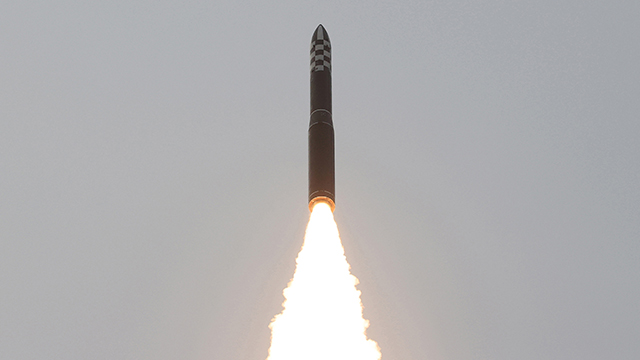
North Korea's Nuclear Program: Key Developments & Future
North Korea's nuclear program stands as one of the most persistent and vexing challenges to global security in the 21st century. For decades, the hermit kingdom has defied international pressure, sanctions, and diplomatic efforts to develop and refine its arsenal of nuclear weapons and ballistic missiles. The quest for
north korea nukes is deeply intertwined with the nation's perceived security needs, regime survival, and desire for international recognition, making it a complex issue with far-reaching implications. This article delves into the key developments that have shaped this program, explores the motivations driving Pyongyang's nuclear ambitions, and examines potential future trajectories.
A Brief History of North Korea's Nuclear Ambitions
North Korea's journey towards acquiring nuclear capabilities began subtly in the 1960s, driven by a desire for self-reliance in defense. Initially, the focus was on peaceful nuclear energy, with Soviet assistance playing a role in the establishment of the Yongbyon Nuclear Scientific Research Center. However, by the late 1980s, international concern grew as satellite imagery suggested the construction of facilities capable of producing plutonium, a key material for nuclear weapons.
The pivotal moment arrived in 1993 when North Korea announced its intention to withdraw from the Nuclear Non-Proliferation Treaty (NPT), signaling its nuclear weapon aspirations. Though it temporarily reversed course, the pattern of brinkmanship was set. By the mid-2000s, after years of on-again, off-again negotiations, including the ill-fated Six-Party Talks, North Korea conducted its first underground nuclear test in October 2006. This event unequivocally confirmed its status as a nuclear power, dramatically escalating regional tensions.
Under the leadership of Kim Jong Il and, subsequently, his son Kim Jong Un, the program accelerated dramatically. Subsequent tests demonstrated increasing yields, suggesting progress in warhead design. Concurrently, a robust ballistic missile program evolved, developing capabilities ranging from short-range tactical weapons to intercontinental ballistic missiles (ICBMs) theoretically capable of reaching the continental United States. The persistent development of
north korea nukes and delivery systems has created a unique strategic landscape, pushing the boundaries of traditional deterrence theory.
Key Milestones in North Korea's Nuclear Development
The trajectory of North Korea's nuclear program can be best understood by examining its critical technical milestones. Each test and every new missile deployment have served as both a technical validation and a political statement.
- Nuclear Tests: Since 2006, North Korea has conducted six confirmed nuclear tests. The most powerful, in September 2017, involved what Pyongyang claimed was a hydrogen bomb, demonstrating an estimated yield far greater than previous tests and suggesting advancements in thermonuclear weapon design.
- Ballistic Missile Advancements: Pyongyang has invested heavily in a diverse array of ballistic missiles.
- ICBMs: The Hwasong-14 and Hwasong-15 demonstrated ranges capable of reaching the U.S. mainland. The more recent Hwasong-17, a massive, liquid-fueled ICBM dubbed the "monster missile," suggests potential for multiple warheads or decoys.
- IRBMs: The Hwasong-12, capable of striking Guam, has been tested multiple times, often overflying Japan, causing regional alarm.
- SLBMs: The Pukguksong series represents a critical step towards a survivable second-strike capability from submerged platforms.
- Hypersonic Missiles: Recent claims and tests indicate an effort to develop weapons that are extremely difficult to intercept due to their high speed and maneuverability.
- Warhead Miniaturization: While difficult to independently verify, North Korea claims to have successfully miniaturized nuclear warheads for missile deployment, a crucial step for achieving a credible nuclear deterrent.
These developments underscore a systematic and determined effort to build a comprehensive nuclear deterrent. For a deeper look into the specifics of these capabilities, you might find
Insights into North Korea's Evolving Nuclear Arsenal particularly informative.
Motivations and International Responses
Understanding why North Korea has pursued
north korea nukes with such tenacity is crucial. Several interwoven factors drive Pyongyang's strategy:
- Regime Survival: The nuclear program is seen as the ultimate guarantee for the survival of the Kim dynasty, learning from the fates of leaders like Saddam Hussein and Muammar Gaddafi.
- Deterrence: Nuclear weapons are viewed as a cost-effective deterrent against conventional attacks and a means to prevent regime change from militarily superior adversaries like the United States and its allies.
- Bargaining Chip: The program has historically been used as leverage in negotiations, seeking economic aid, sanctions relief, or security guarantees in exchange for partial concessions.
- National Prestige: Possessing nuclear weapons elevates North Korea's status globally, presenting it as a sovereign power capable of standing up to major global actors.
The international community's response has been a mix of condemnation, sanctions, and diplomacy, often with limited success. The United Nations Security Council has imposed numerous sanctions, yet Pyongyang has largely found ways to circumvent these restrictions. Diplomatic efforts, from multilateral formats like the Six-Party Talks to high-stakes bilateral summits, have largely failed to achieve concrete steps towards denuclearization, primarily due to fundamental disagreements on sequencing between denuclearization and sanctions relief. For a broader perspective on the global implications, consider reading
Decoding North Korea's Nuclear Threat: A Global Challenge.
The Future of North Korea's Nuclear Program: Scenarios and Practical Tips
The future of
north korea nukes remains highly uncertain, with several potential scenarios:
- Continued Development: Most likely, North Korea will expand and modernize its arsenal, striving for greater reliability, survivability, and diversity, including tactical nuclear weapons and solid-fuel missile technology. This trajectory implies an enduring challenge to global non-proliferation efforts.
- Stalemate and "De Facto" Recognition: The international community might eventually accept North Korea as a nuclear-armed state, shifting focus from denuclearization to arms control, risk reduction, and preventing the proliferation of its technology to other actors.
- Renewed Diplomacy: A new diplomatic initiative, based on creative solutions and a phased approach with verifiable steps, could emerge. However, trust is severely eroded, and the domestic political costs for both sides remain high.
To effectively address this complex challenge, staying informed is crucial. Here are practical tips for understanding developments:
- Monitor Official Statements: KCNA pronouncements offer clues about intentions and capabilities, even amidst propaganda.
- Track Satellite Imagery: Independent analysts publish analyses of activity at key nuclear and missile sites (e.g., Yongbyon, Punggye-ri, Sohae), offering visual evidence of progress.
- Observe Missile Tests: The type, range, and frequency of tests indicate technological progress and their strategic implications for regional and global security.
- Analyze International Responses: Observe reactions from the UN, U.S., South Korea, China, and Japan regarding sanctions, diplomacy, and military exercises, as these shape the broader context.
- Understand the Geopolitical Context: North Korea's actions are often influenced by broader global events, including U.S.-China relations, inter-Korean relations, and global power shifts.
Conclusion
North Korea's nuclear program represents a persistent and evolving threat, shaped by a complex interplay of historical grievances, security imperatives, and regime survival instincts. From its nascent stages to the development of sophisticated ICBMs and suspected thermonuclear weapons, the journey of
north korea nukes has defied prediction and challenged the foundational principles of non-proliferation. While the path to denuclearization remains fraught with obstacles, continued vigilance, robust international cooperation, and creative diplomatic engagement will be essential to manage this enduring global security challenge. The world watches closely as Pyongyang continues to refine its capabilities, making the future trajectory of its nuclear arsenal a critical determinant of peace and stability in East Asia and beyond.