Insights into North Korea's Evolving Nuclear Arsenal
North Korea's nuclear program stands as one of the most pressing and complex geopolitical challenges of our time. Far from a static threat, the Democratic People's Republic of Korea (DPRK) has relentlessly pursued advancements in its nuclear arsenal, transforming it from a rudimentary deterrent into a sophisticated, multi-layered capability. Understanding the trajectory and implications of north korea nukes requires a deep dive into its historical motivations, current capacities, and the intricate web of international responses.
For decades, the world has watched with concern as Pyongyang conducted nuclear tests and launched an array of ballistic missiles, demonstrating an unwavering commitment to its strategic goals. This pursuit isn't merely about acquiring destructive power; it's intricately linked to regime survival, national prestige, and a unique negotiating posture on the global stage. This article explores the journey of North Korea's nuclear ambitions, dissecting its current arsenal and contemplating the path forward in a world grappling with the implications of a nuclear-armed DPRK.
The Genesis of North Korea's Nuclear Ambitions
The roots of North Korea's nuclear program stretch back to the Cold War era, initially spurred by a desire for energy independence and a perceived security vulnerability. Early assistance from the Soviet Union laid the groundwork for a civilian nuclear program, but the political landscape shifted dramatically following the collapse of the Soviet Union and heightened tensions with the United States and South Korea. Pyongyang began to view nuclear weapons as the ultimate guarantor of its sovereignty and the Kim dynasty's rule.
The early 1990s saw North Korea withdraw from the Nuclear Non-Proliferation Treaty (NPT) amid accusations of covert weapons development. Despite various diplomatic efforts, including the Agreed Framework in 1994, the program continued clandestinely. The pivotal moment arrived in 2006, when North Korea conducted its first underground nuclear test, unequivocally declaring itself a nuclear weapons state. This act shattered international norms and set the stage for a new era of confrontation and sanctions. Subsequent tests refined its capabilities, demonstrating progress in miniaturization and yield. For a more detailed look at the historical timeline, consider reading North Korea's Nuclear Program: Key Developments & Future.
Current Capabilities: A Multifaceted Arsenal
Today, the discussion around north korea nukes is no longer just about whether they possess them, but about the extent and sophistication of their arsenal. Pyongyang has demonstrably moved beyond simple fission devices, claiming successful tests of thermonuclear weapons (H-bombs), significantly increasing the destructive potential of its warheads. While the exact number of warheads remains an estimate, intelligence assessments suggest a growing stockpile.
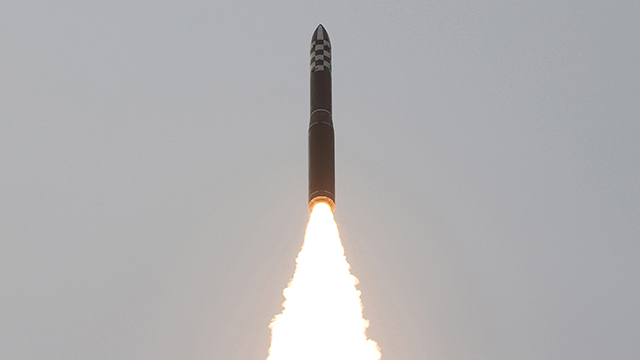
Equally critical is the development of diverse delivery systems. North Korea has invested heavily in ballistic missile technology, showcasing an impressive array:
- Intercontinental Ballistic Missiles (ICBMs): Missiles like the Hwasong-15 and Hwasong-17 have demonstrated ranges theoretically capable of reaching the entire continental United States. These are often launched from transporter erector launchers (TELs), making them mobile and harder to target.
- Submarine-Launched Ballistic Missiles (SLBMs): The Pukguksong series represents a significant leap, offering a second-strike capability and complicating missile defense strategies. Launching from submarines makes detection and pre-emption incredibly challenging.
- Short-Range and Medium-Range Ballistic Missiles: A variety of these missiles, including those with maneuverable re-entry vehicles, are designed to evade regional missile defense systems, posing a direct threat to South Korea, Japan, and U.S. bases in the region. Many of these newer systems are solid-fueled, allowing for quicker deployment and launch.
The DPRK's strategy includes hardening its missile facilities, developing sophisticated command and control systems, and likely pursuing cyber capabilities to disrupt adversaries. This comprehensive approach underscores a determination to build a credible and survivable nuclear deterrent.
Strategic Motivations and Diplomatic Stalemate
Understanding north korea nukes requires an examination of the underlying motivations driving Pyongyang's relentless pursuit. At its core, the program is about regime survival. The Kim family views nuclear weapons as the ultimate guarantee against external aggression, particularly from the United States, citing examples like Libya and Iraq where leaders who abandoned WMD programs were ultimately overthrown. Beyond deterrence, nuclear weapons provide:
- Leverage in Negotiations: A nuclear arsenal gives North Korea a powerful bargaining chip to demand economic concessions, sanctions relief, and international recognition.
- National Prestige: Possessing nuclear weapons elevates North Korea's status on the world stage, fulfilling a long-held ambition to be recognized as a powerful, independent state.
- Internal Cohesion: The nuclear program is presented internally as a testament to the strength and wisdom of the leadership, fostering national pride and loyalty.
The international community, led by the United States, has largely responded with a strategy of "maximum pressure" through sanctions and diplomatic isolation, coupled with efforts at denuclearization talks. However, repeated rounds of multilateral and bilateral diplomacy, including the Six-Party Talks and summit meetings between U.S. presidents and Kim Jong Un, have failed to achieve denuclearization. The fundamental disconnect lies in Pyongyang's unwillingness to fully abandon its arsenal, which it perceives as vital for its survival, and the international community's demand for complete, verifiable, and irreversible denuclearization (CVID). This persistent stalemate has allowed North Korea to continue advancing its capabilities.
Forecasting the Future: Challenges and Potential Paths
The trajectory of north korea nukes suggests continued development and refinement of its arsenal. We can anticipate further missile tests, potentially including new ICBM designs or multiple-warhead capabilities. The DPRK may also seek to diversify its nuclear materials and delivery methods, including tactical nuclear weapons to be used on the battlefield. This ongoing advancement poses several critical challenges:
- Escalation Risk: The enhanced capabilities increase the risk of miscalculation or accidental escalation in the event of regional conflict.
- Proliferation Concerns: North Korea's willingness to sell missile technology raises fears of nuclear technology proliferation to other rogue states or non-state actors.
- Regional Instability: The threat impacts the security calculations of South Korea and Japan, potentially driving them towards enhanced conventional or even nuclear deterrent capabilities themselves.
Practical approaches to managing this evolving threat require a multi-pronged strategy. Sanctions, while imperfect, remain a critical tool for limiting North Korea's access to resources for its weapons programs. However, effective enforcement requires global cooperation. Diplomatic engagement, though often frustrating, must also remain an option, focusing on realistic, step-by-step approaches rather than an all-or-nothing demand for CVID. Furthermore, maintaining a strong deterrence posture, through military readiness and alliances, is crucial to prevent aggression.
Experts often point to the need for creative diplomatic solutions that acknowledge North Korea's security concerns while gradually rolling back its nuclear program. This could involve phased denuclearization for phased sanctions relief, coupled with security guarantees. Ultimately, fostering dialogue and finding common ground, however difficult, is paramount. For a deeper understanding of the global implications, explore Decoding North Korea's Nuclear Threat: A Global Challenge.
Conclusion
The evolution of North Korea's nuclear arsenal is a testament to its unwavering commitment to its security doctrine and a persistent challenge to global non-proliferation efforts. From its nascent stages to its current advanced capabilities in both warhead design and delivery systems, north korea nukes have fundamentally altered the geopolitical landscape of East Asia and beyond. The international community faces a complex task: preventing further proliferation, de-escalating tensions, and ultimately working towards a denuclearized Korean Peninsula. This requires sustained diplomatic effort, robust intelligence, and a unified approach to sanctions and engagement. While the path to denuclearization remains fraught with obstacles, understanding the full scope of North Korea's nuclear ambitions and capabilities is the critical first step toward navigating this enduring global challenge.